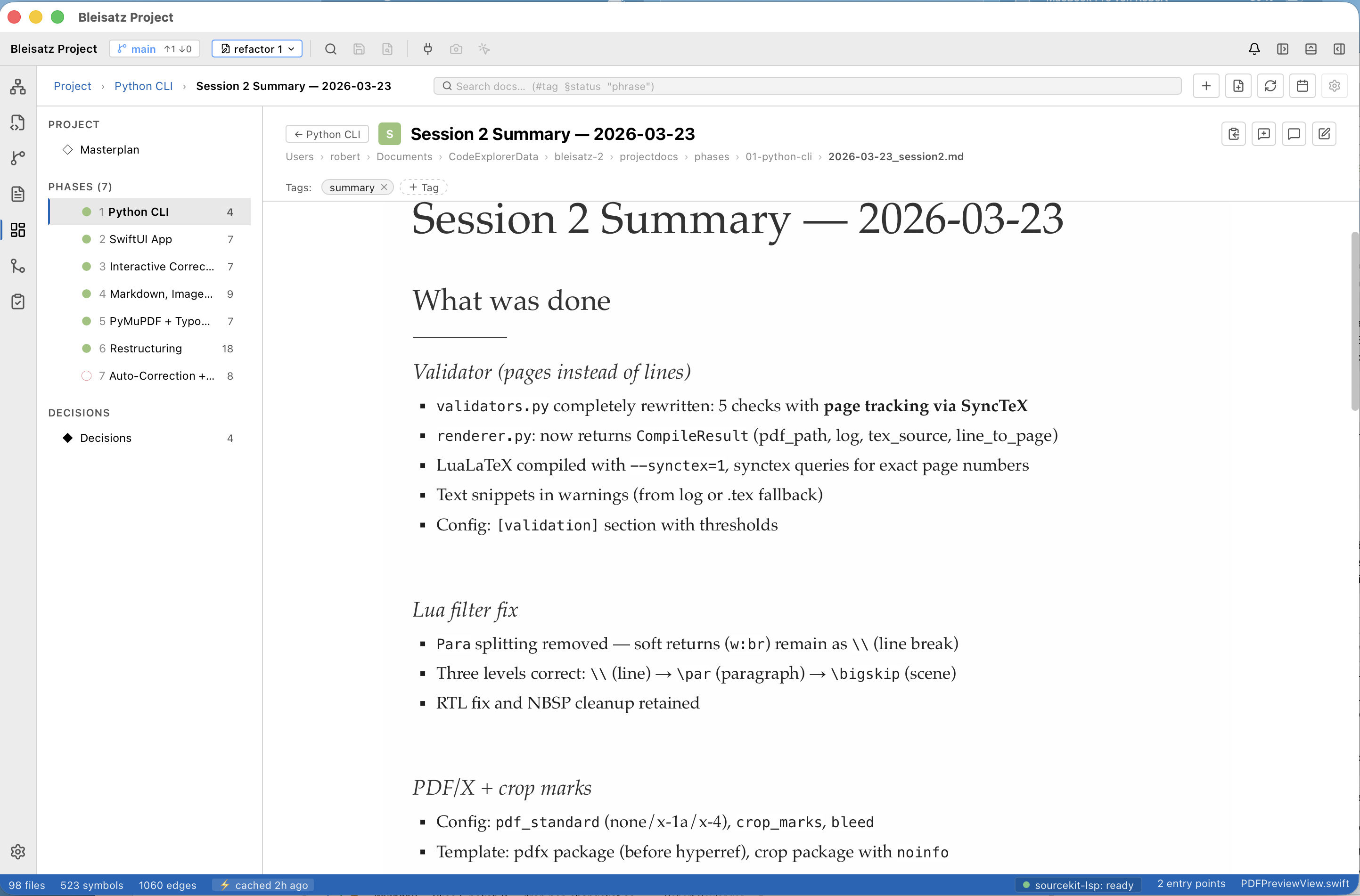
The whole development process, recorded over time.
Project memory is more than feature docs. It captures how the software was built — from the first planning steps through design and implementation to bug fixes — and keeps that history navigable as the project grows.
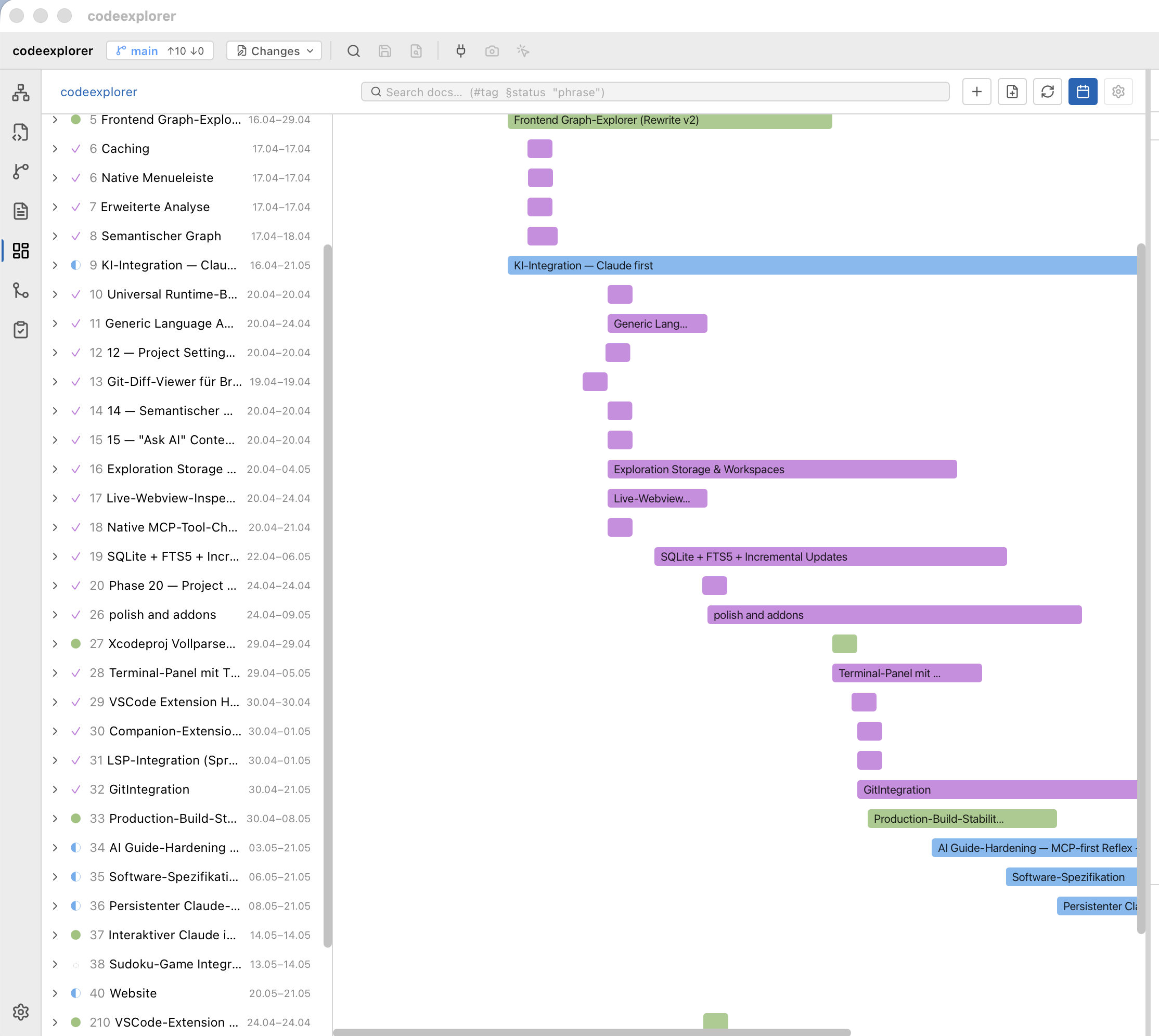
From first plan to bug fix
Plan it, design it, document it — then track every change against that record. Phases group the work the way it actually happened, and each one keeps its plans, decisions, summaries and bug reports together.
- Planning, design and rationale, not just feature docs
- The entire process, traceable over time
- Phases and subphases that mirror how the project grew
The AI reads it all — and the graph
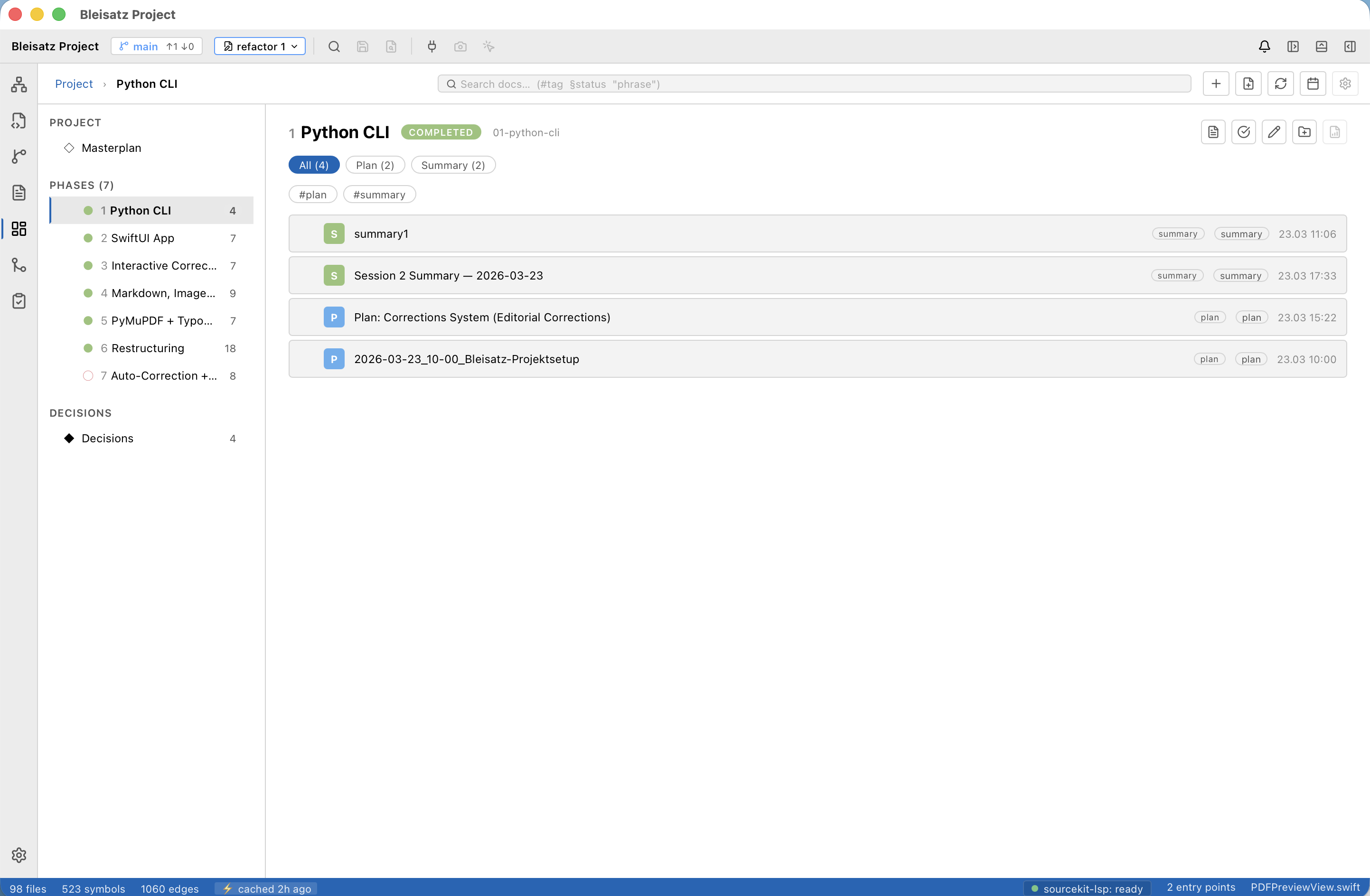
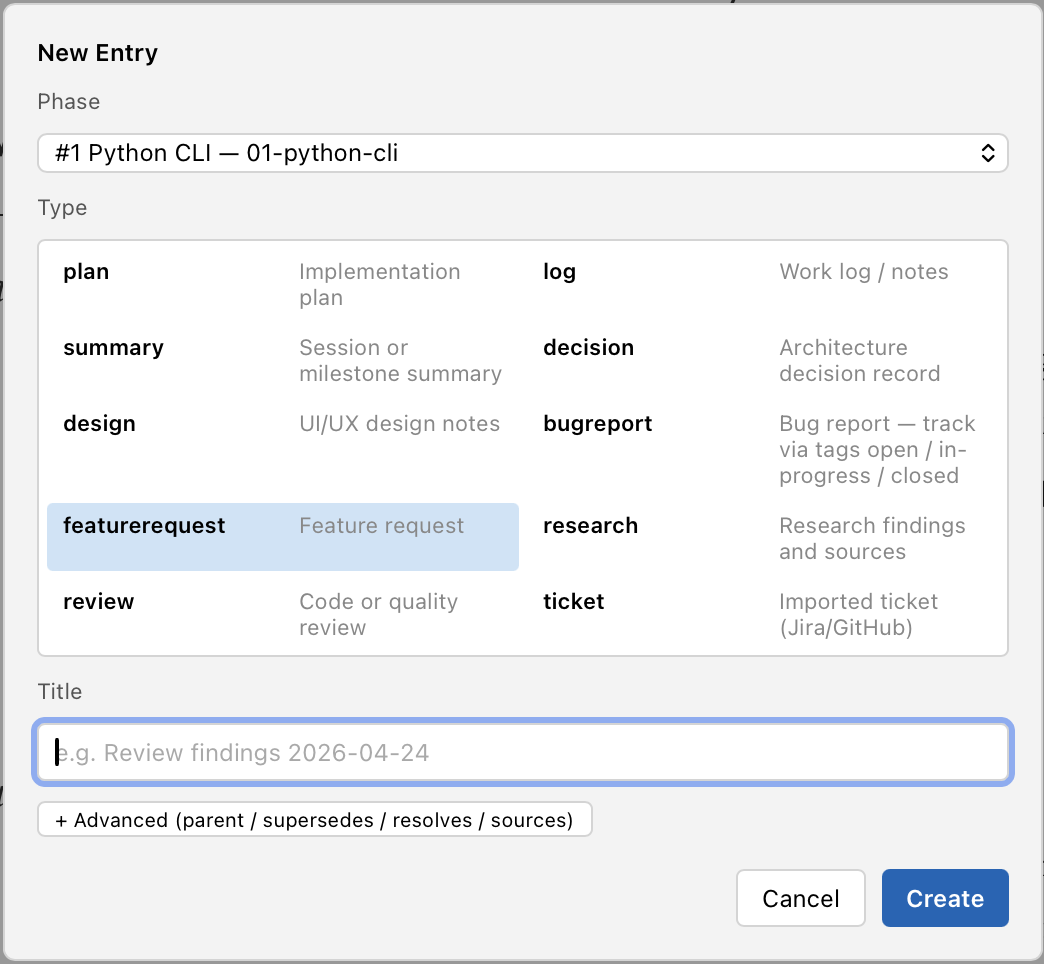
The assistant has full access to this documentation through its integrated tools: it can read, write and understand every entry. Combined with the prebuilt code graph, there is no slow searching and no laborious context-building — the AI forms context in a fraction of the time, and a fraction of the tokens normally burned on it.
Valuable even without specs
You don't need a formal specification process to benefit. Project memory is, on its own, a clear audit trail of your work: at any point you can see when, what, why and how something was implemented.
For solo developers and teams alike, that record is the difference between guessing and knowing.