AI that already knows your codebase.
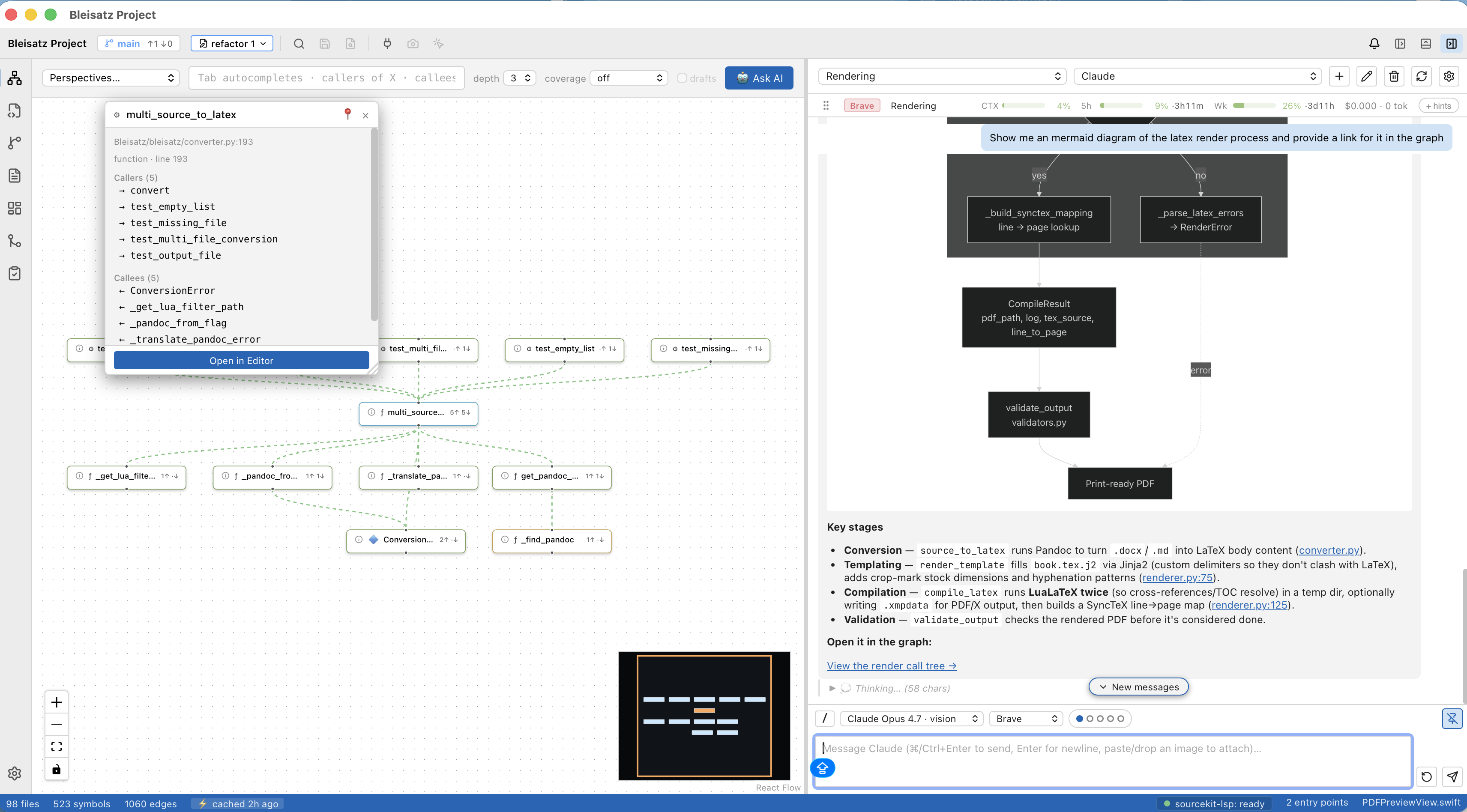
The assistant works on the same prebuilt index you do — so it answers from structure, not guesswork. Ask a question, get an explanation, a diagram, and a link straight into the graph.
Grounded, not generic
Because the analysis is already done, the assistant reasons over actual symbols, call chains and clusters. Answers point at real files and real lines — and every reference is a click away.
- Explanations anchored to the indexed code
- Diagrams and call chains rendered on demand
- Specs and project memory read as first-class context
It writes the spine, too
The same assistant drafts functional specifications from existing code, records decisions into project memory, and keeps the documentation honest as the project moves. Understanding and building, from one place.
Claude is a first-class citizen — but it's your choice
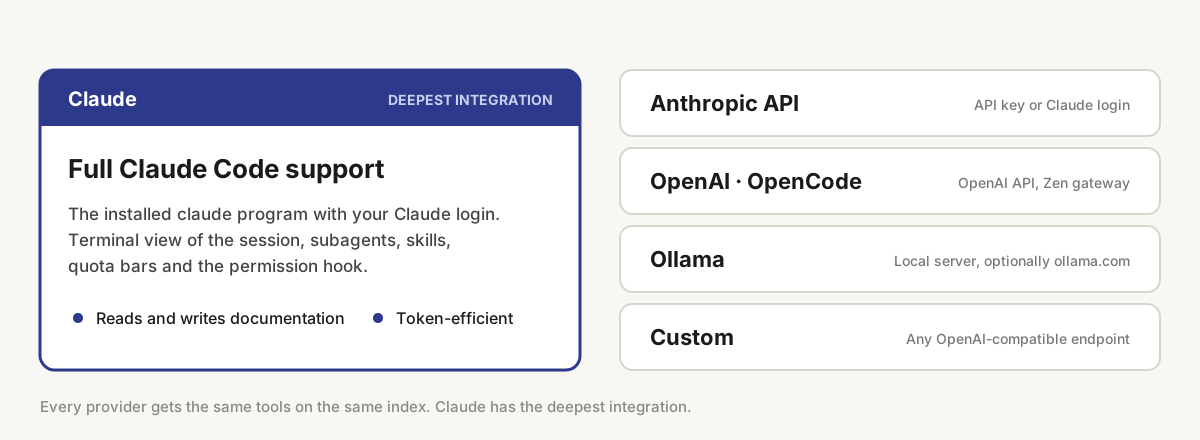
Code Explorer ships with full Claude Code support: the deepest, most native integration, tuned to be fast and token-efficient. Prefer another provider? OpenAI, Gemini and local Ollama models are supported too — the tool is model-agnostic.
Every session becomes documentation
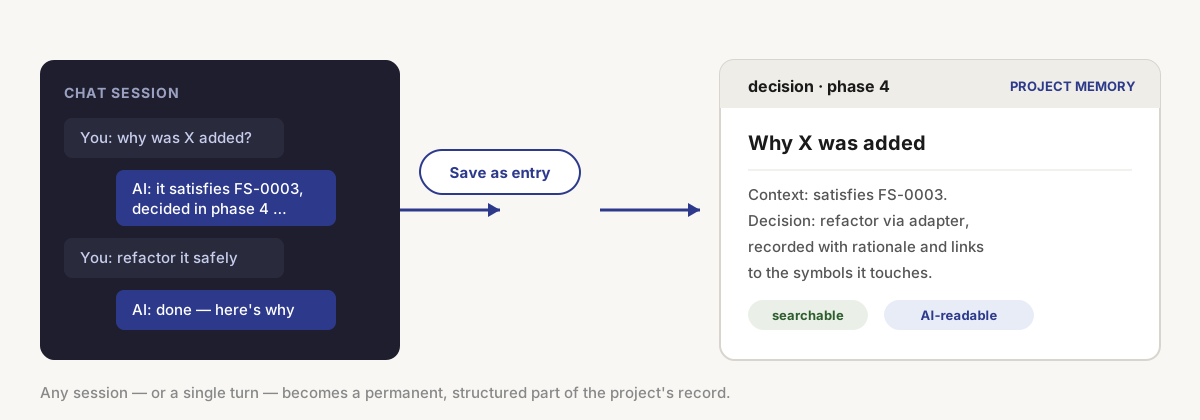
Unlike most AI-powered tools, nothing has to evaporate when the chat ends. Any session — or a single turn — can be turned into a documentation entry: a decision, a summary, a research note.
The reasoning behind a change is captured where it belongs, in the project's memory, instead of being lost in a scrollback you'll never find again.